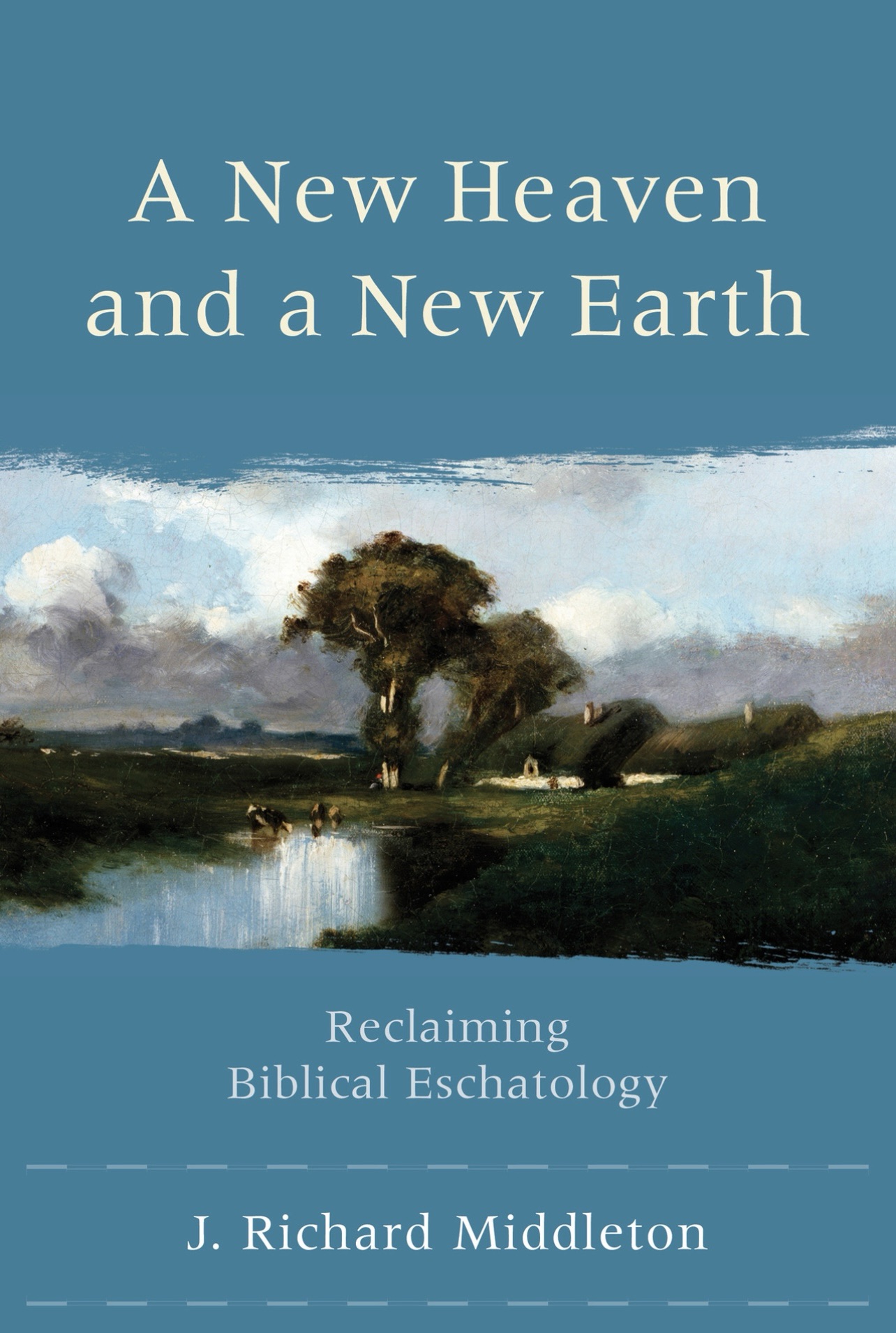
If you haven’t read Dr. J. Richard Middleton’s book entitled, “A New Heaven and a New Earth,” you need to. In describing what his book covers, one of my favorite biblical scholars writes in his preface:
“The time is ripe, therefore, for a clearly articulated Christian eschatology that is rooted in responsible exegesis of Scripture and also attuned to the theological claims and ethical implications of the Bible’s vision of salvation. This eschatology will also need to be serviceable for the church, pointing the way toward faithful living in the here and now. This book is one small contribution toward such an eschatology. Its primary purpose is to clarify how New Testament eschatology, rather than being a speculative add-on to the Bible, actually coheres with, and is the logical outworking of, the consistently holistic theology of the entirety of Scripture.”
J. Richard clarifies it further a few sentences later…
“The primary purpose of this book is to sketch the coherent biblical theology (beginning in the Old Testament) that culminates in the New Testament’s explicit eschatological vision of the redemption of creation.”
If this doesn’t quite make sense yet, it will.
Podcast
I recently came across the podcast, “New Creation Conversations” by Dr. Scott Daniels. In episode 052, Daniels interviews Middleton. During the interview, when discussing “A New Heaven and a New Earth,” Daniels asked J. Richard about his book:
“In the book you described, ‘a coherent, biblical theology.’ If someone were to ask you (maybe outside of the tradition of Christian faith): ‘Dr. Middleton, What is the story that the scripture is telling?’ How would you describe the coherent, biblical theology in the story that the scripture is telling?”
Middleton’s answer was nothing less than stunning, and is probably the best summation of what the Bible is about that I have ever come across. He even summed it up with an invitation:
“God loves the world that He made. He brought this world into being and declared it ‘good.’ And, He put humans in the world as His image. They’re His representatives in the world, to develop the world further beyond the primitive stage of nature into culture. And, we’ve screwed up. And, God chose out of all the nations of the world Abraham and His people to become a microcosm of God’s intent for the world, and to become an instrument of blessing, that through their obedience the world would find its way back to God. But, they kept screwing up in multiple ways, until God sent the Messiah as a representative of both Israel and of humanity. That’s why the Messiah is the anointed one of Israel. But, He’s also the paradigm image of God. And, He lived the life that we’re supposed to have lived, a perfect life. And, He took all the pain and suffering of the world to Himself, because He was basically, you know, killed, because He opposed the unjust world that we had constructed. He represented God’s purposes and through His death and resurrection He has given us new life, and brought a community together of Jew and Gentile to be His representatives in the world. And, they keep failing. But, the Holy Spirit is with us and we can keep coming back to that task. And, the task ahead of us is to be faithful to this vision:
To represent the good news of God’s love for the world until that day when Heaven and Earth are filled with God’s glory and the world is redeemed.
Do you want to join that? Want to be a part of that kingdom? Because, it’s coming whether you are a part of it or not.
…That’s my gospel story.”
Here’s the link to “A New Heaven and a New Earth,” on Amazon:
Here’s a link to the podcast episode:
Godspeed, to the brethren!
Check out my book!

 theidolbabbler.com